Can You Put New Siding Over Old Siding? When It Works and When It Doesn't
Can new siding go over old siding?
Sometimes, but rarely. We only install over existing siding when it's wood panel siding that's still structurally sound, which we check with a probe test, pressing a scratch awl into the panels to find soft or rotted spots, and when it's very flat, without deep or wide channels. On many homes of a certain era, that panel siding isn't just the finish; it doubles as the wall's structural sheathing, so where it's sound, it can stay, and the new siding goes over it. Washington's state historic preservation office lists T1-11 plywood panel siding among the typical finishes of the Shed-style homes builders put up here from about 1960 to 1985, and on those houses there's often nothing behind the panels but the studs and insulation, so tearing them off typically means putting up new plywood or OSB sheathing before any siding goes on. Where the panels are sound and flat, keeping them as the sheathing saves that step.
Other kinds of siding, like lap siding, shingles, or panels with deep grooves, don't give the new siding a flat, solid base, so they come off. Vinyl and metal siding always come off first: they're hollow-backed, so they can't give James Hardie siding the flat, solid base it needs.
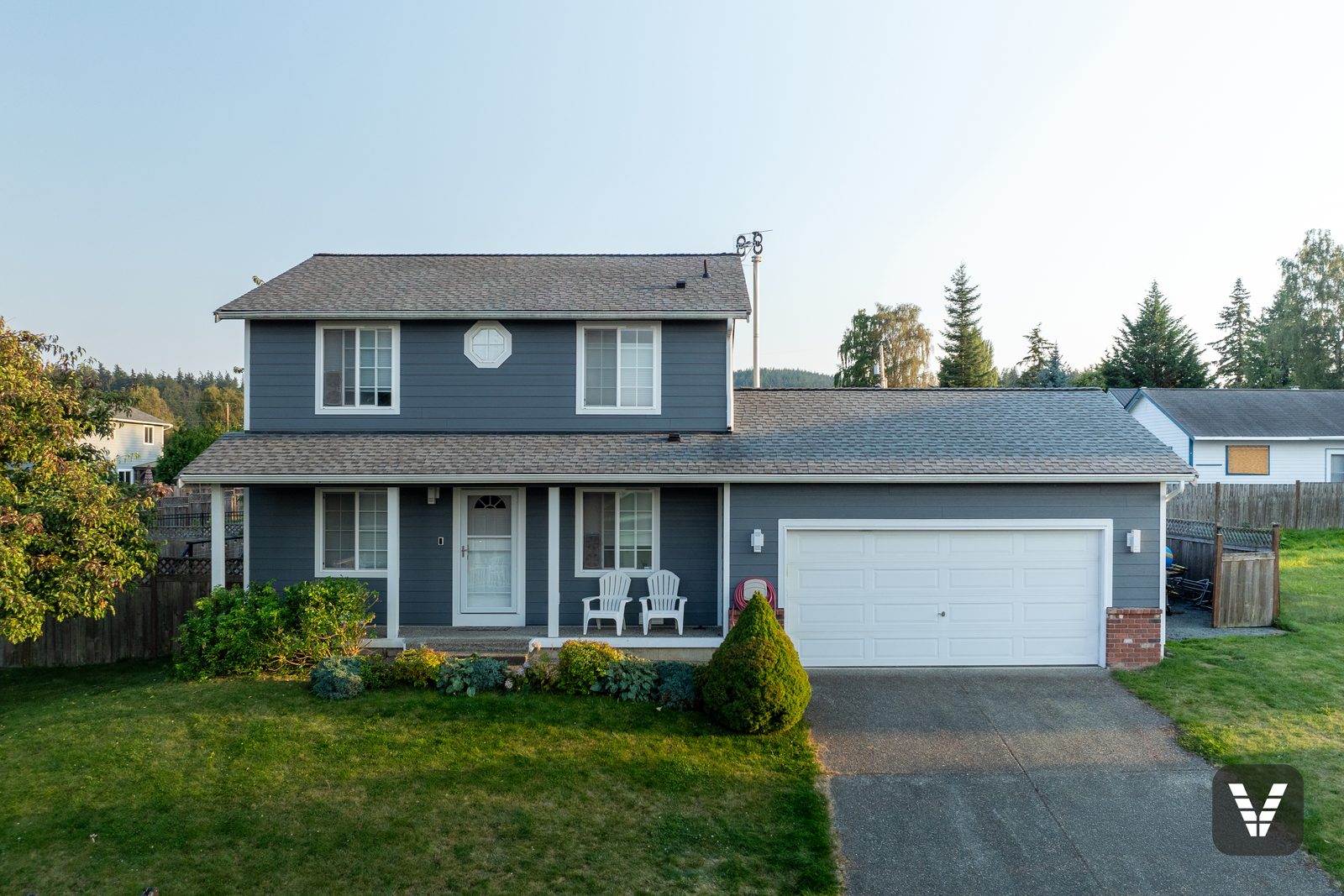
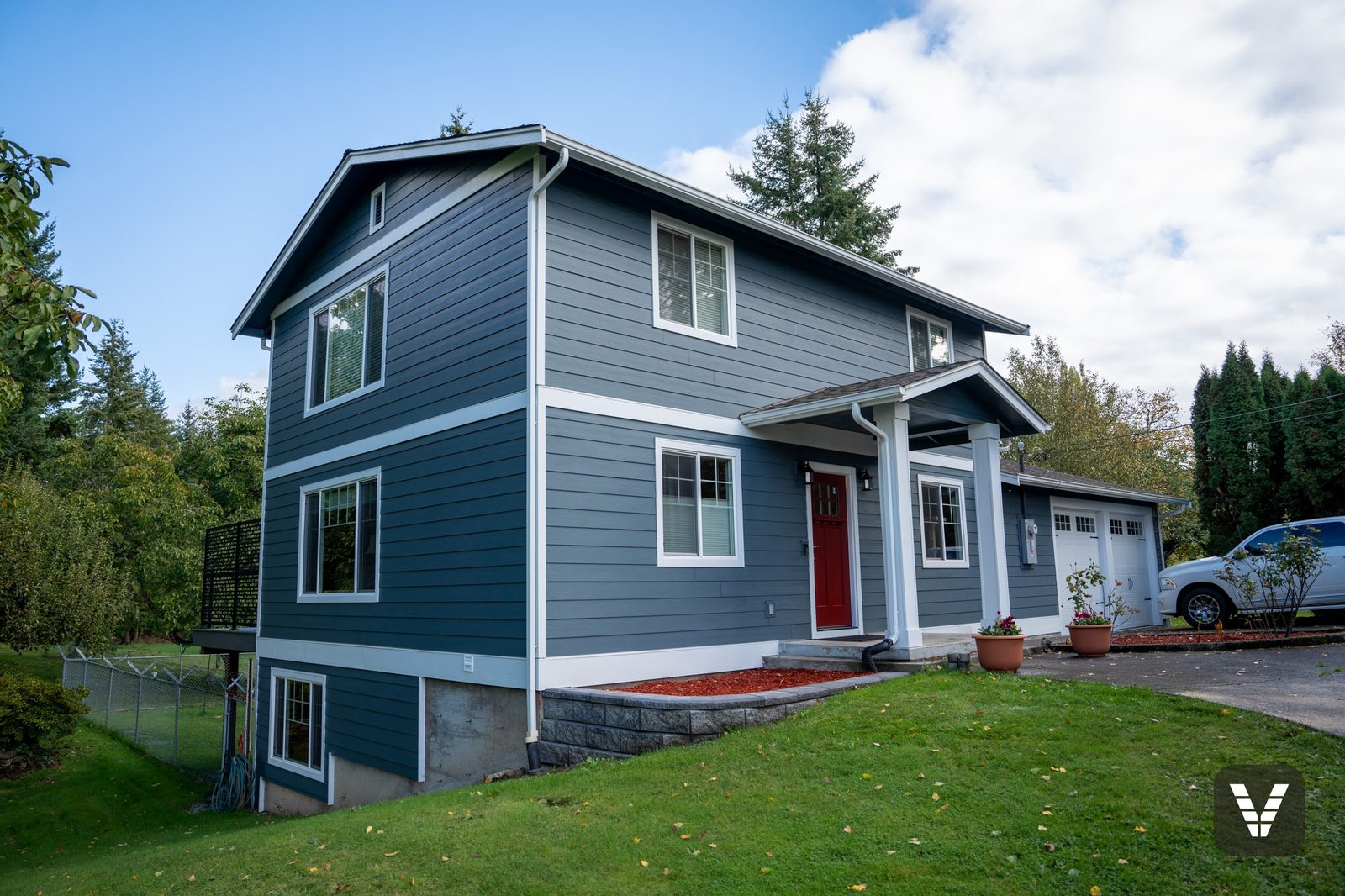
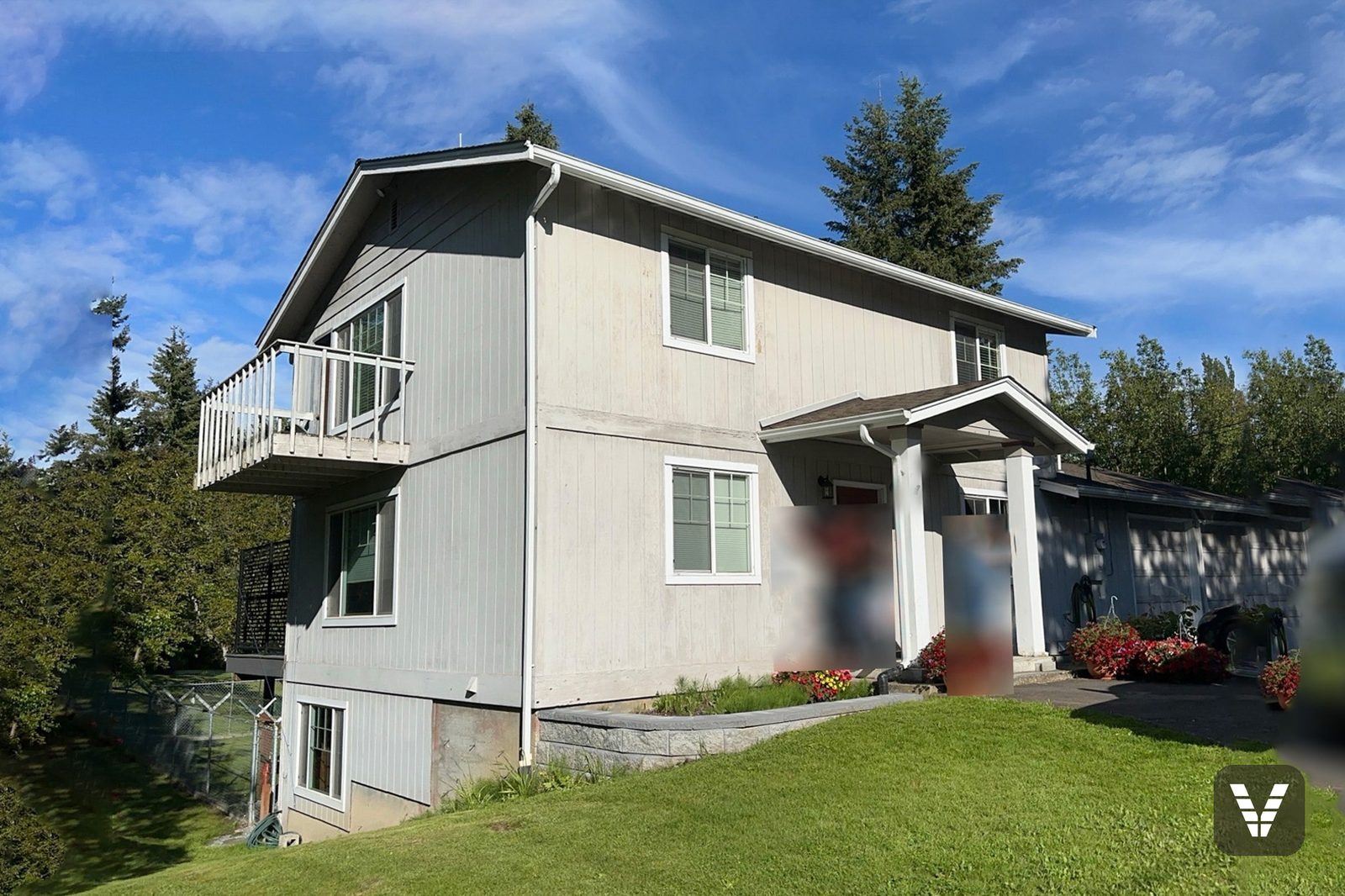
A real example: a Ferndale panel-to-lap re-side. This two-story in Ferndale wore the flat vertical panels its builder chose decades ago, and those panels were also its sheathing. The old panels stayed where they were sound, and the worst weathered sheets were replaced so the new lap would lie flat. Up in the gable ends, there turned out to be no sheathing behind the panels at all, so the gables got their first real sheathing. Then the whole house was wrapped in house wrap, every window and door was flash-taped, the studs were marked, and new Evening Blue James Hardie lap siding went on over it, with every plank fastened through the old panel into the framing, as James Hardie's instructions call for. It was a success: the new lap went on over the sound panels and lies flat, and the photos on this page show the house before and after. See the full project, with before-and-after photos.
Ask any siding bidder whether the old siding comes off. If it stays, ask how they'll check the wall behind it.
What you give up when you skip the tear-off
Going over old siding saves the cost of tearing it off and hauling it away. The trade-offs are real, though:
- The wall isn't inspected. With the old siding left on, the framing behind it isn't seen, so rot, water damage, or missing sheathing can stay hidden under brand-new siding.
- Waves can show through. Old siding usually isn't as flat as new sheathing, so the new siding is more likely to mirror its waves. James Hardie's own installation instructions warn that unevenness in the wall behind the siding can show through in the finished siding.
Two things don't change either way. Washington's residential code still calls for a water-resistive barrier behind the new siding and flashing at windows, doors, and above trim, and old siding doesn't serve as that barrier, which is why house wrap goes on over it. And going over sound panel siding doesn't by itself trap water in the middle of the wall: water typically gets in at the edges, around windows and doors and along the bottom, so that's where the flashing and taping work goes.
That's why going over old siding only makes sense when the old siding is sound, flat panel siding that can serve as the wall's sheathing, and why the worst sheets still get replaced first.
Why our standard re-side starts with a full tear-off
A full tear-off takes the wall back to the sheathing, so it can be inspected and repaired before anything new goes on. On a full-home re-side, rotted sheathing is typically replaced at no extra cost; on a partial re-side, it's decided case by case. Anything past the sheathing is very uncommon; if we find it, it's photographed and quoted as a change order for your approval, as outlined in your contract.
With the wall open, everything behind the siding goes on new: house wrap over the walls, flashing tape at every window and door, the studs marked so every plank is nailed into framing, joint flashing behind every seam, and metal Z-flashing above the windows. That's why our standard re-side includes a full tear-off, and why our pricing, typically $11–$16 per square foot of wall for prefinished James Hardie siding, includes it. Our siding replacement cost guide has the full numbers.
Prices change often with inflation, material costs, the economy, and tariffs and other policy changes, so these ranges are a guide, not a quote. Your written estimate has the current price for your home.
Lead. On homes built before 1978, Washington's lead-safe rules cover any exterior job that disturbs more than 20 square feet of painted surface, and when painted siding or trim comes off, the whole piece counts. A tear-off is always past that line, and even an overlay can cross it once trim and the worst panels come off. The rules don't apply when a certified renovator's test or a certified inspector shows the paint is lead-free. Siding & Window Vault is Lead-Safe Certified by the State of Washington.
Asbestos. Some older siding, most often cement-based shingles, can contain asbestos. Before a contractor's crew disturbs material like that, Washington law calls for an asbestos inspection by an accredited inspector, unless the material is treated as asbestos from the start and handled under the asbestos rules. Right now, the local asbestos rules for remodeling come from the Northwest Clean Air Agency in Whatcom, Skagit, Island, and San Juan counties and the Puget Sound Clean Air Agency in Snohomish County, so check nwcleanairwa.gov or pscleanair.gov for current steps. Our asbestos-to-Hardie bungalow in Bellingham shows what that kind of re-side looks like. When a permit is needed for your re-side, our permit guide covers each county.