Full-Frame vs. Insert Windows: What's the Difference, and Why We Only Install Full-Frame
What's the difference between full-frame and insert windows?
A full-frame replacement takes the old window out completely, frame and all, down to the rough opening in the wall's framing. The new window has a nail flange, a fin around its outside edge, that's fastened through the wall sheathing into the framing, sealed, and then taped with window flashing tape before the trim goes back on. An insert, also called a pocket or retrofit window, leaves the old frame in place: the old sashes come out, and a new, smaller window is set inside the old frame and sealed with caulk.
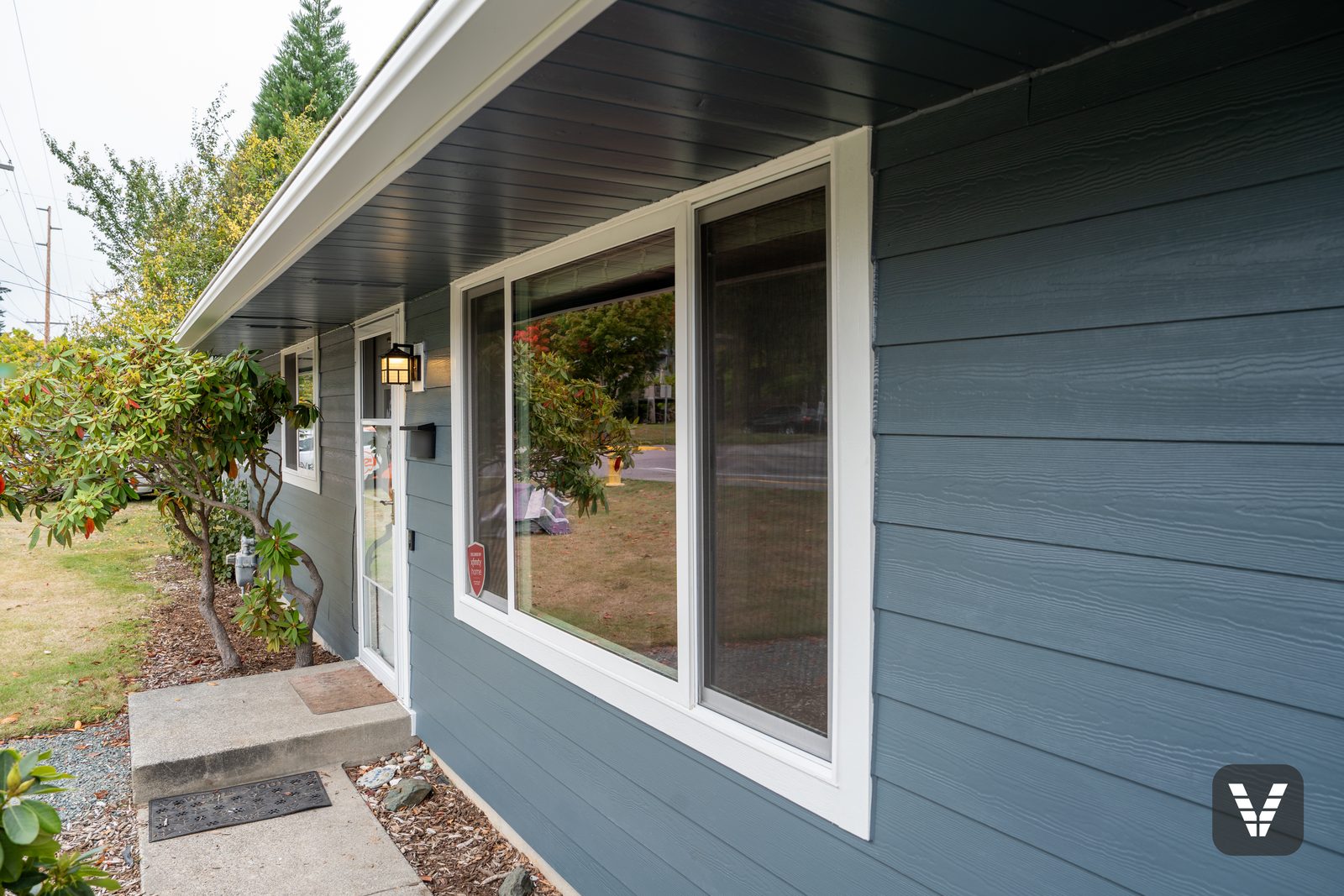
From the street, the two can look alike. The difference is in the wall. A full-frame window is tied into the house's weather barrier the way a new-construction window is, while an insert relies on caulk and the old frame to keep water out.
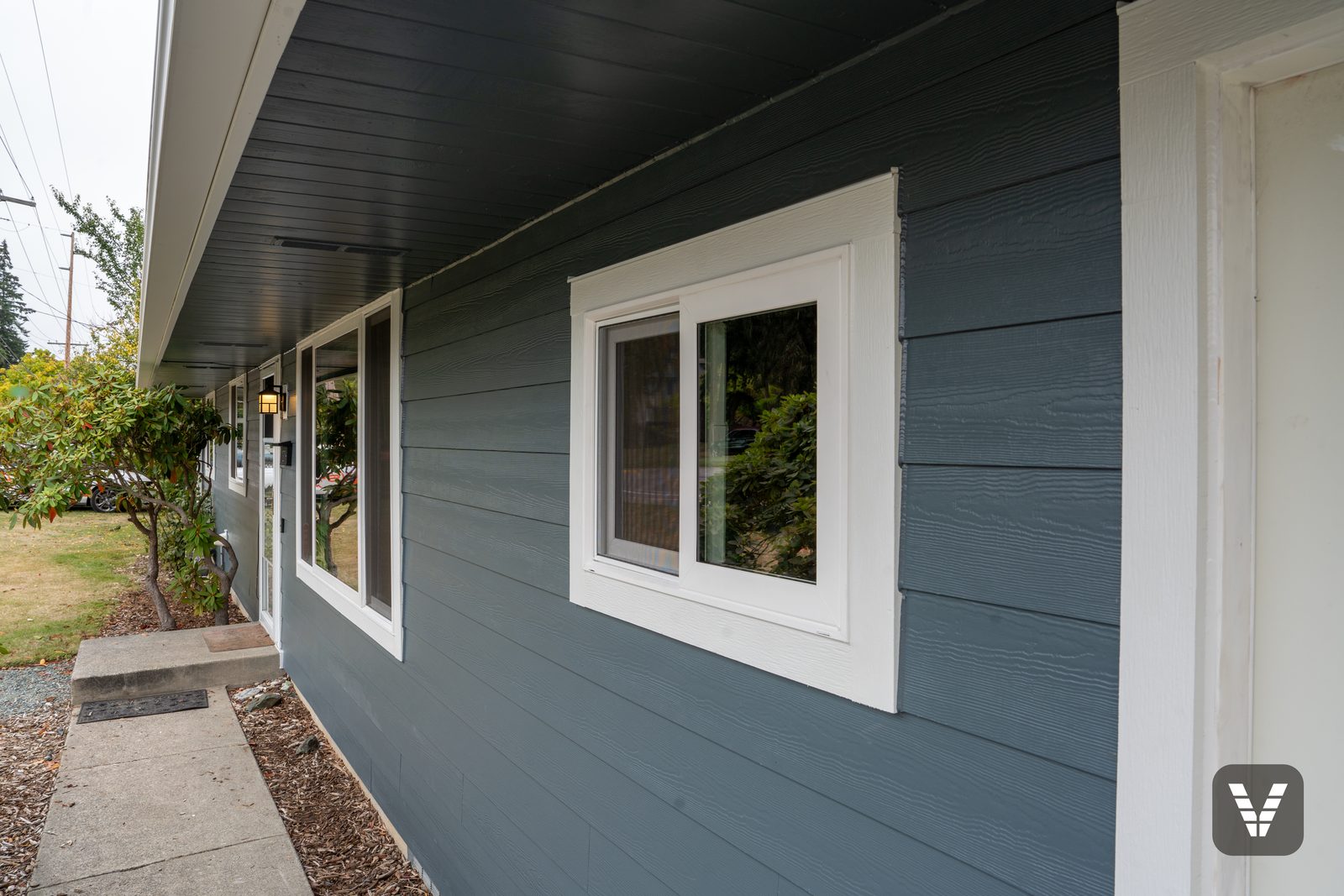
- Full-frame (nail-flange): the old window, frame, and exterior trim come out; the new window's flange is fastened through the sheathing into the framing and sealed to the wall; flashing tape goes over the flanges, lapped from the bottom up; new trim, flashing, and caulking finish it.
- Insert (pocket): the old frame and trim stay; the new window sits inside the old frame; it's sealed with caulk and trim stops; there's no flange to fasten or tape.
Because an insert's frame sits inside the old frame, you lose a strip of glass along all four edges. On a big picture window you may barely notice; on a small bathroom window or a narrow single-hung, the new window can look noticeably smaller. A full-frame window uses the full opening. The same goes for bedroom escape windows: Washington lets a replacement bedroom window keep a smaller opening than today's rules require if it's the largest standard size that fits the existing opening and it opens the same way or wider, and an insert typically opens smaller than a full-frame window in the same spot.
How to tell which one a bid is for. Ask: "Will you need to remove the exterior trim to replace the window?" If the answer is no, the bid is almost certainly for an insert. Some bids say "full-frame" but use a flangeless window that leaves the trim in place, so ask about the flange too.
Before you sign any window bid, ask two things: does the exterior trim come off, and does the new window have a nail flange that gets taped into the weather barrier? If either answer is no, the window is sealed with caulk, whatever the bid calls it.
Why don't you install insert windows?
Our professional experience has shown inserts are a terrible fit for the Pacific Northwest, so we discourage them so strongly that we don't offer them at all. The main reason isn't rot; it's the nail flange. Wind-driven rain here finds every gap, and in Whatcom County, winter can also bring Fraser outflow: cold northeast winds that pour out of British Columbia's Fraser River valley, typically strongest between Bellingham's airport and Blaine. The cold spells that come with them can last several days to a week, and that's when a drafty window shows itself. A nail-flange window is sealed to the framing and taped with flashing tape, lapped from the bottom up, so water that gets behind the siding sheds back out instead of into the wall, and the window isn't drafty. An insert has no flange to seal or tape, so it depends on caulk around an old frame.
You'll read that an insert is fine as long as the old frame is in good shape. A sound frame helps, but it still can't give the new window a flange to tape into the weather barrier, so the seal around an insert still comes down to caulk, and here that caulk faces wind-driven rain every winter. We're not alone on this: Energy Trust of Oregon, an energy-efficiency program that also serves southwest Washington, told its contractors to replace a nail-flange window with another flanged window, not an insert, because without the flange a thin bead of caulk is often all that keeps winter storms out of the wall.
Just across the border, coastal British Columbia learned this the hard way. In the region's "leaky condo" failures, a Canada Mortgage and Housing Corporation survey found water getting into walls at the joints where siding met windows, decks, and balconies, the places that depended on a perfect exterior seal. The fix that followed was walls built to drain water out, not just sealed at the surface.
Full-frame replacement also lets us see the opening. If we find rot in the sill or framing once the old window is out, we show you, price the repair, and fix it before the new window goes in, instead of covering it with a new window.
The most common mistake we see on window replacements is at the top of the window: no metal Z-flashing over the head trim. On full-frame work we install it wherever siding runs above the window, with at least a 1/4-inch gap, left uncaulked, between the flashing and the siding above, so water that gets behind the siding can drain out instead of wicking back into the wall. James Hardie's trim instructions call for the same open gap, so don't let anyone caulk it shut when the house is painted.
If your home was built before 1978, Washington treats every window replacement, insert or full-frame, as a lead-safe renovation, however small the window; it never counts as a minor repair. The contractor has to be a certified renovation firm, give you the lead pamphlet before work starts, and follow lead-safe work practices. Right now the Washington State Department of Commerce runs this program, so ask any bidder for their certification. Census Bureau estimates show about 4 in 10 homes in Whatcom and Skagit counties were built before 1980, so this comes up on a lot of window jobs here. Siding & Window Vault is Lead-Safe Certified by the State of Washington.
Is full-frame worth the extra cost?
A full-frame, nail-flange window typically costs more to replace than an insert, because the trim comes off, the old frame comes out, and the opening is flashed and trimmed again. As a standalone project, standard vinyl windows typically run $1,100–$2,500 per window installed, and composite windows typically run about 15–40% more.
Prices change often with inflation, material costs, the economy, and tariffs and other policy changes, so these ranges are a guide, not a quote. Your written estimate has the current price for your home.
National price figures can look much lower than ours. Before you compare, check what a number covers: the window itself, removing the old frame, flashing, new trim, haul-away, and local labor. The window unit typically costs about the same either way; most of the difference between an insert and full-frame is the extra labor and finishing.
The energy code is the same either way. Right now, Washington's energy code holds every replacement window, insert or full-frame, to a U-factor of 0.30 or lower (or an average of 0.30 across all the new windows), rated and labeled by NFRC. Our standard Milgard V400 Tuscany windows typically rate about U-0.27 to U-0.29. Codes change, so check the Washington State Building Code Council's website for the current number. The glass rules are the same for both methods; the installation is what separates them.
Permits. Insert or full-frame, permit rules depend on your city. Right now Bellingham's permit-exemption list doesn't include window replacement, and changing the size of an opening needs a permit nearly everywhere. When a permit is needed, we can pull it and handle the inspections for you. Our permit guide covers each county.
The least expensive way to get full-frame windows is during a re-side. The siding and trim around every window are already off, so windows replaced during a re-side typically run $900–$1,600 per standard vinyl window, 20–35% less than the same windows replaced on their own. Our window replacement cost guide has the full numbers.
Full-frame work also takes longer: as a standalone project, a crew typically replaces at least a few full-frame windows a day. But it gives much better results and is a much better long-term investment, and each opening is sealed back up the same day it's opened.