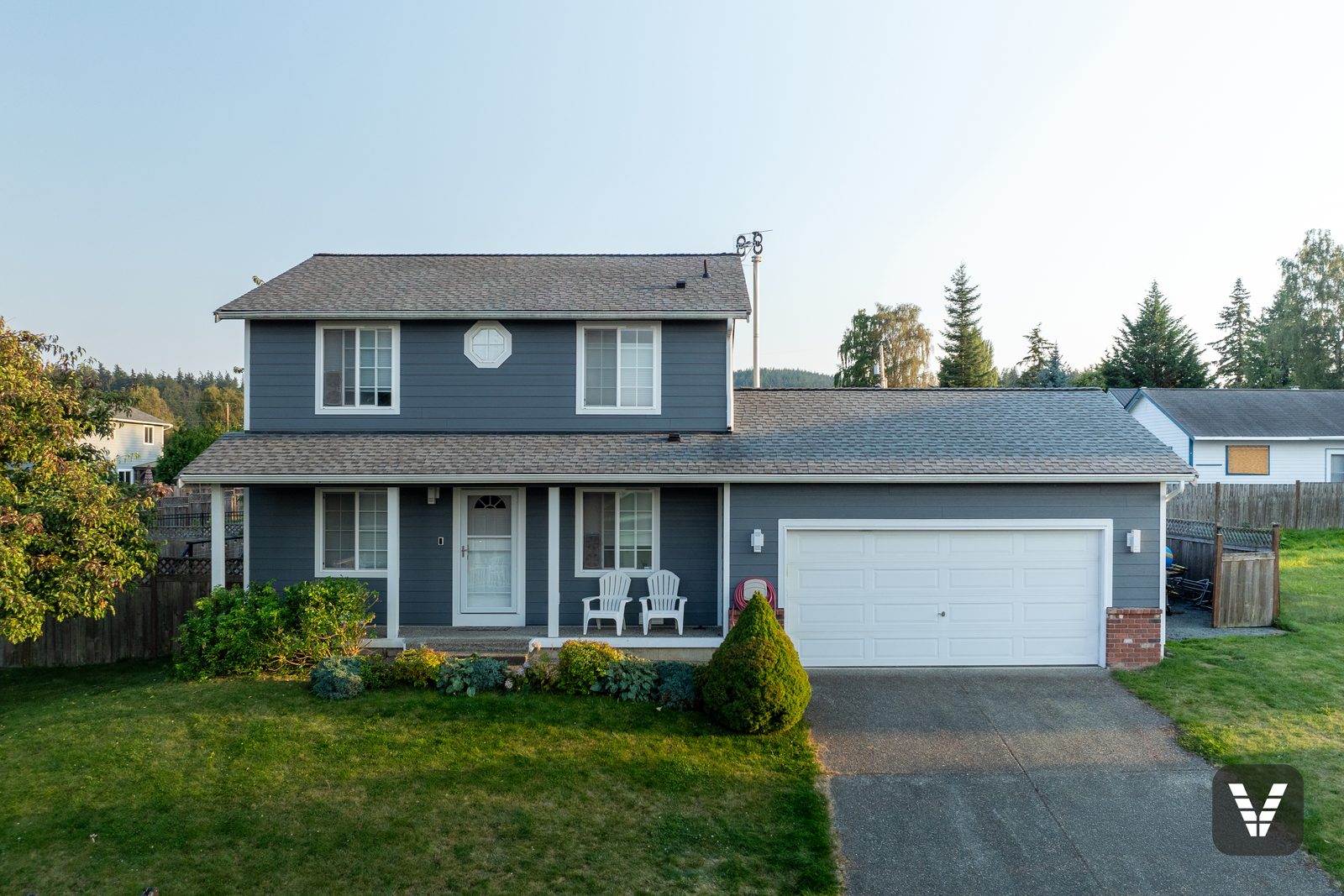
Window Replacement in Bellingham: What It Costs, Who to Hire, and When It's Cheapest
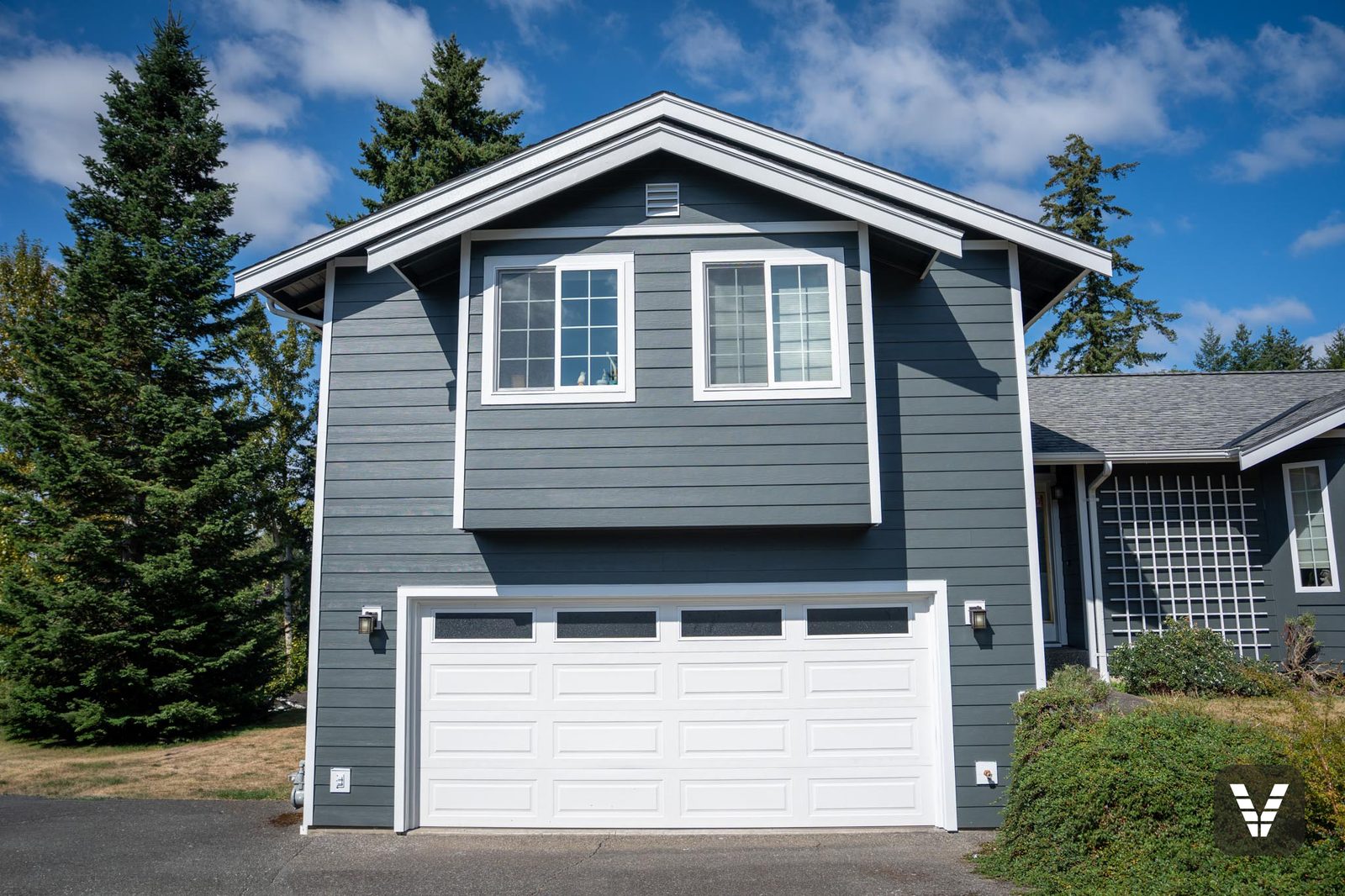
Short version: around Bellingham, a standalone window replacement typically runs $1,100–$2,500 per window installed for standard vinyl windows, and $900–$1,600 when the windows are replaced during a siding replacement. Proper installation matters more than the brand, so who you hire matters more than the label on the glass. And the least expensive time of year is typically the off-season, which you can ask for ahead of time. Here are the questions homeowners ask most, answered with local detail.
What is the average cost to put new windows in a house?
Around Bellingham, a standalone window replacement typically runs $1,100–$2,500 per window installed for standard vinyl windows, the most common replacement window today, so a 10-window house typically lands between $11,000 and $25,000 before sales tax. Where a window falls in that range depends mostly on brand, type, and size. Composite windows, like Andersen's 100 Series, typically run about 15–40% more per window.
Prices change often with inflation, material costs, the economy, and tariffs and other policy changes, so these ranges are a guide, not a quote. Your written estimate has the current price for your home.
The lower prices you may see quoted, around $900 a window, are typically for a small window replaced during a siding replacement. The tear-off, disposal, and trim work are already part of the siding job, so those windows typically run $900–$1,600 each, 20–35% less than standalone.
Glass only (pane replacement). If only the glass has failed — a fogged or cracked pane — replacing the pane typically runs $200–$600 per pane. Where it lands depends on the window frame, the pane's size, and its features — whether it's tempered, has grids (and which type), or is obscure privacy glass — plus how many panes are replaced in the same visit: the more panes replaced at once, the lower the price per pane typically gets. We replace panes as part of a larger project, like a re-side or a window replacement, but we don't offer pane replacement as a standalone service.
Whole-house cost by home size. Whole-house window projects we quote typically run from about 8 to 30 windows. Using the same per-window ranges for standard vinyl windows, before sales tax:
- Smaller home or cottage (about 8–12 windows): typically $8,800–$30,000 as a standalone project, or $7,200–$19,200 during a re-side.
- Mid-size home (about 13–20 windows): typically $14,300–$50,000 standalone, or $11,700–$32,000 during a re-side.
- Larger home (about 21–30 windows): typically $23,100–$75,000 standalone, or $18,900–$48,000 during a re-side.
Bigger projects typically land toward the lower end of the per-window range, because setup, travel, and disposal are shared across more openings — one or two windows on their own typically price toward the higher end.
All at once or a few at a time? Typically all at once. Replacing every window in one project typically costs less per window than doing a few at a time, because setup, travel, and disposal happen once instead of on every visit. Phasing the work can ease a tight budget, but expect the total to come out higher.
Brand and material. Milgard's V400 Tuscany, one of the most popular windows in Whatcom County right now, falls within those same ranges: typically $1,100–$2,500 per window as a standalone project and $900–$1,600 during a re-side. Those ranges are for standard vinyl windows, like Milgard's Tuscany and Trinsic and Ply Gem's vinyl lines, the most common replacement windows today; many price ranges you'll see online don't say which material they mean. Composite windows, like Andersen's 100 Series, typically run about 15–40% more: roughly $1,450–$2,850 per window as a standalone project, or $1,250–$1,950 during a re-side. Wood or clad-wood windows typically sit at the top. Size, operating style, grids, and specialty glass like tempered or obscure glass move a window within the range.
Vinyl or composite. Vinyl is the standard window we recommend for most homes. We typically suggest upgrading to a composite frame only when the budget allows, or when a home has extra-large horizontal windows: vinyl is weaker than composite, and large horizontal vinyl windows tend to bow at the middle of the top frame. Andersen's 100 Series, a very popular composite window, is made of Fibrex, which Andersen says is two times stronger than vinyl. Where the budget allows, it makes a better window, and in those wide layouts it holds up better over the long term. If you stay with vinyl for a large horizontal window, choose the manufacturer's thicker vinyl frame: Milgard's V400 Tuscany frame, for example, is 3-1/4 inches deep, compared with 2-7/8 inches for its V300 Trinsic, which gives it a slight edge.
Which windows last longest. For the longest life with the least upkeep, fiberglass is typically the best starting point: it's dimensionally stable, so it holds its shape through temperature swings, though it usually costs more than vinyl. Composite is a strong contender, but the word covers different formulas, so judge the specific product's construction and track record. Vinyl is often the best value: it resists moisture, needs little maintenance, and a well-made vinyl window can be a sensible long-term buy. Wood and clad-wood windows can last for generations with maintenance and repairs, and suit homeowners who value their look and repairability and accept more upkeep. We install fiberglass windows too, like Milgard's Ultra Series.
Is it worth replacing 20-year-old windows? It depends on their condition, not just their age. Start by looking up the typical lifespan for your windows' frame material, like vinyl, aluminum, or composite. If they're getting close — and 20 years is close for many windows — watch more closely for the common failures: cracked or failing seals, fogged glass or condensation between the panes, clogged weep holes, and leaks that reach the inside of the home, which are sometimes a siding or flashing problem rather than the window itself. The most common sign is the seals breaking down over time, cracking and pulling apart, and windows that get the most sun typically fail first. Don't count the screens: they're separate from how the window works and inexpensive to repair.
Window style. Picture (fixed) windows are typically the least expensive, since they have no moving parts. Sliders typically price about the same as single-hung windows, casements typically cost more than all three, and bay and bow windows typically sit at the top — in our experience they're also the most prone to failure. The exception is custom combination windows, like a picture window over a slider: their prices vary widely, with some below a bay or bow window and others above it.
Double-pane vs. triple-pane. Triple-pane windows are great, but we don't recommend them for most homes in the Pacific Northwest. Our winters aren't nearly as cold as the places where triple-pane is common, like Alaska, so for most homeowners it's unnecessary, and that money is better spent elsewhere on the project. A quality double-pane window with a low-E coating and argon fill is what we install on most homes here.
Energy rating (U-factor). Our standard Milgard V400 Tuscany windows, with SunCoat low-E glass and argon, typically rate about U-0.27 to U-0.29 depending on the style; the lower the number, the better the window insulates. Windows rated U-0.22 or lower, which PSE's top rebate tier and Cascade Natural Gas's rebate require, take an upgraded glass package.
Nail-flange vs. pocket windows. A nail-flange (full-frame) window typically costs more to replace than a pocket-style insert, because the trim comes off and the new window's nail fin is fastened and sealed to the house framing, then sealed over with window flashing tape. For most homes it's a must-have: that seal keeps the window from being drafty, and the taped flange keeps water out of the wall, which is critical in the Pacific Northwest. A pocket insert sits inside the old frame with no flange to seal or tape, and our professional experience has shown pocket inserts are a terrible fit for the Pacific Northwest. We discourage them so strongly that we don't offer them at all.
Waterfront homes. Salt air is hard on window hardware, so near the water we recommend:
- Frames that hold up to salt air: vinyl, like Milgard's V400 Tuscany, or composite, like Andersen's Fibrex, rather than aluminum, which can corrode, or exposed wood.
- Picture windows on the water side: a fixed window has no hardware to corrode, so it's the best choice facing the water. Sliders and single-hung windows are fine too, since most of their hardware is concealed. Crank-out windows — casements and awnings — have the most exposed hardware, and in our experience it's the most prone to failure on waterfront homes.
- Corrosion-resistant hardware, and a look at the warranty: where a series offers stainless or corrosion-resistant hardware, it's worth it near salt water. Check how the warranty treats homes close to salt water, too; some manufacturers limit hardware corrosion coverage there.
- Wind rating on exposed lots: on an exposed shoreline lot the building code can call for windows rated for higher wind pressure, so check the window's design-pressure (DP) rating, especially on large view windows.
- Glass: tempered glass on large openings and wherever code requires it, low-E coatings to cut solar heat on water-facing walls, and easy-clean coatings where the brand offers them.
- Care: rinse hardware, tracks, and glass with fresh water a few times a year; some warranties make regular care a condition of coverage.
Buying your own windows and hiring an installer. Whether it's cheaper depends on where you buy the windows and whether you're comparing apples to apples. Many homeowners assume a Milgard window is the same everywhere, but each brand makes several models in different tiers, and big-box stores typically carry the low-tier, builder-budget models, which aren't a fair comparison to the mid-tier windows that are standard in replacement work. Milgard's entry-level V250, for example, is a different window at a different price point than the V400, with major differences between them.
It also depends on who will install them. Many contractors won't install windows a homeowner provides, especially established window replacement companies, so the list of contractors willing to bid your project shrinks significantly; you can expect nearly every established window company to decline. Customer-bought windows can arrive scuffed, scraped, or broken, and because a homeowner has no account with the manufacturer, getting a damaged or wrong unit replaced is slow. Those delays frustrate the homeowner and hold up the contractor too, which is why reputable window companies, having seen the logistics and extra oversight these jobs take, don't take them on. In new home construction it's normal for the builder to provide the windows, but not in replacement and remodel work.
Measuring is where most of these projects go wrong. A common mistake is trusting someone else to take the measurements, then having the windows delivered in the wrong size — nothing is more frustrating for the contractor doing the replacement. Homeowners also order without understanding the difference between rough opening and net frame measurements (the rough opening is the framed hole in the wall; the net frame is the window itself, typically 1/2 inch smaller so it fits the opening). Even when they do understand it, they may measure the inside of the window rather than the outside, and even measuring outside, they may measure in the wrong spot. There are too many opportunities for mistakes, and even one mis-ordered window makes the job take significantly longer. Mixing up net and rough sizes is a very common mistake, and we've seen many homeowners have to order every window over again over that 1/2-inch difference. Just 1/2 inch can force you to order all new windows for your home, and that financial hit ends up costing more than hiring a reputable window replacement contractor who orders, installs, and handles any support if an issue comes up. If you still want to supply your own, line up your installer before you order, have them take the measurements, and agree on who handles a damaged unit.
The national averages you see online are lower still — Angi currently puts it at about $750 per window — because they mix in cheaper markets and insert-style installs.
Two more local things move your number:
- Utility rebates. Right now, Puget Sound Energy pays $50–$100 per window in some electrically heated homes. The details are in the questions at the end of this article.
- Sales tax. Washington charges sales tax on the whole job, at the rate for your address. Right now that is 9.2% in Bellingham, 9.1% in Ferndale and Blaine, and 9.3% in Lynden. Rates change, so check the Washington Department of Revenue's website for the current rate.
If a siding replacement is anywhere in your plans, price the windows with it. The tear-off, disposal, and trim work are already part of the siding job, which is why the lowest per-window prices come from combined projects.
What's the best company for replacement windows?
There isn't one best brand, because proper installation matters more than the window brand or model, and replacing a window takes more know-how than installing one. On a new house, the window installer only has to set the window; a siding crew comes afterward to flash it, trim it, side around it, and caulk it. On a replacement, the siding, trim, flashing, and caulking are already there, so whoever replaces the window has to know what a siding contractor knows to put the wall back together properly.
The most common mistake we see is at the top of the window: no metal Z-flashing, or no gap above it. There should be roughly a 1/4-inch space between the flashing and the first course of siding above, so water drains out instead of wicking back into the wall.
Siding & Window Vault is a siding contractor as well as a window installer, and a James Hardie Elite Contractor, so this is the work our crews are trained in. It's also why we only do full-frame replacement and don't recommend insert windows. A full-frame window is flanged: it has a nail fin that is fastened and sealed to the building's framing, which is what keeps it from being drafty. An insert has no flange; it only sits inside the old frame.
Whoever you hire in Washington, check their registration, bond, and insurance on L&I's Verify a Contractor lookup, and ask three things:
- What will you do if you find rot?
- Are the windows flanged, or are they inserts?
- How do you flash the top of the window?
One more question tells you a lot: "Will you need to remove the exterior trim to replace the window?" If the answer is no, they will very likely cut the old window out and set an insert in its place, which has no flange and is far inferior to a flanged window. Our suggestion is to pass on that bid and find a contractor who will install a proper flanged window.
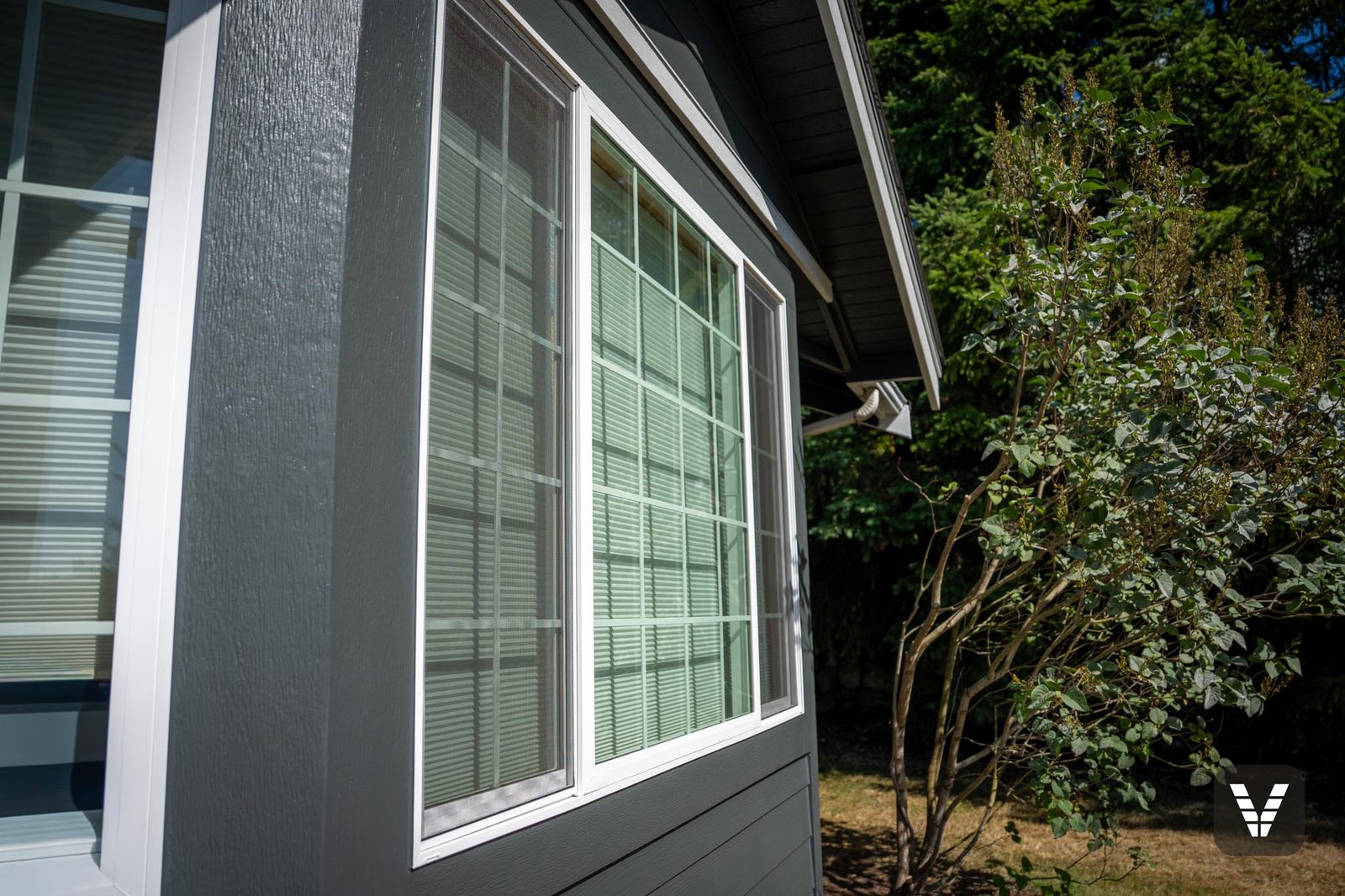
What is the cheapest time of year to replace windows?
Usually the off-season: the rainy and snowy months, roughly November through March. NOAA's climate averages for Bellingham show those months bring most of the year's rain and nearly all of its snow. We replace windows year-round, but the off-season is typically less expensive, for two reasons. First, it is the less convenient time. Most homeowners stay in the house during the work, and an open window opening lets cold air and wind in. Second, it is the slower season for the top window manufacturers, so their lead times to build and deliver windows are typically shorter. Those less favorable conditions often show up as a lower price.
For many homeowners that makes the off-season a great way to save. Siding & Window Vault still recommends talking it through with your contractor first and planning carefully: which windows get replaced first, and how the disturbance to an occupied home will be kept to a minimum. The simplest way is for the contractor to tell you which windows they are working on first, so everyone in the house can use the other side of the building and any draft is kept to a minimum. On our jobs each window comes out and goes back in the same day, so no opening is left unsealed overnight.
Ordering, deposit, and warranty. We take 50% down when you approve the project, since the windows are custom-ordered for your openings. They typically arrive 2–4 weeks after ordering in the summer and in about 2 weeks in the off-season. The windows carry the manufacturer's warranty, and we provide a workmanship warranty on our installation.
How long it takes. As a standalone project, a crew typically replaces at least a few full-frame windows a day; during a re-side it goes much faster, since the siding and trim around each window are already off. A whole-home window replacement typically runs three to seven days, depending on the size of the home and the number of openings. The pace depends on the crew size, the size of the windows, and how easy they are to reach — a ground-floor window goes faster than one three stories up — and on whether the old window has exterior trim and what kind of interior casing it has, which can make a big difference in the time each window takes. Full-frame, nail-flange windows take longer to install than pocket inserts, but they give much better results and are a much better long-term investment.
You also don't have to wait for the off-season to ask for a quote. If you want to be proactive, request one during the busy season. Once you have the bid, ask the contractor whether they would lower the price if you let them do the work in their slow season, which is usually the window off-season. Siding & Window Vault sometimes does this, and we call it the Flex Schedule Discount. It works for both sides: you get the lowest price possible, and the contractor keeps busy-season openings for clients who need the work done soonest and don't want their windows replaced in the least convenient season.